Downloadable AI prompt toolkit · $49 one-time

Tracking questions. Client reports. Ad ideas. Start with the right workflow.

Six AI workflows for freelance Meta ads specialists. Add your inputs. Get a focused analysis or draft to review.

  • $49 one-time
  • Six ready-made workflows
  • Runs in your own AI chat
Fictional example. An illustration, not a saved ChatGPT response.

Built by a Digital Ads Operations Manager, from years of paid-media, tracking and reporting work

What it helps with

Three questions every client asks.

01 · Meta Conversion Tracking Triage

Why don’t the numbers match?

Paste the counts and how each report measures them. See which gaps are just different counting rules, which point to a real tracking fault, and the one check to run next.

See the real response
Fictional example

02 · Meta Campaign Delivery Troubleshooter

Why isn’t it spending?

Paste the status, notices, schedule and report window. Work through the checks in order and stop at the first one that explains the zero.

See the real response
Fictional example

03 · Meta Campaign Report Analyst

What do I tell the client?

Paste the report rows. Get the metrics recalculated, what changed in one line, and a client update drafted for your review.

See the real response
Fictional example

See it work

Real ChatGPT responses, not mock-ups.

The takeaway comes first. Open the full response when you want the detail.

A Lead fired, but the form never went through.

Three reports disagree and the manager blames Pixel and CAPI “double-counting”. The response goes straight to the real fault.

  1. IssueA Lead fired on a failed form submission
  2. EvidenceValidation error, no thank-you page, no CRM record, yet one browser Lead
  3. Next checkInspect the deployed browser Lead trigger

Takeaway · edited summary

Pasted: a fictional website form case. Ads Manager 9 Leads, Events Manager 38, CRM 25, plus two form tests.

Exact text pastedFictional example

Intended conversion and exact success action: A website Lead should represent a completed consultation-request form that shows a thank-you confirmation and creates one CRM record. Meta conversion location: Website form only. No Meta instant form or messaging conversion. Sources in use: Meta Pixel in the browser and Conversions API from the form backend. The exact deployed tag and server versions are unknown. Expected versus observed: The marketing manager suspects “Pixel and CAPI are double-counting” because the reports disagree. They have not verified that the reports use the same scope. Redacted evidence: E1 — Ads Manager screenshot, September 26, America/New_York: 9 attributed Website Leads for Campaign A. The screenshot shows a 7-day-click/1-day-view attribution setting. Other campaigns are excluded. E2 — Events Manager screenshot, September 26 in UTC: 38 Lead events across the dataset’s browser and server sources, including traffic outside Campaign A. No deduplication detail is visible. E3 — CRM export summary, September 26, America/New_York: 25 unique consultation-request records from all traffic sources, including two staff test submissions. It does not identify which records came from Campaign A. E4 — One authorized, consent-granted production test at 10:14 America/New_York: the tester submitted the form once and saw the thank-you confirmation; one CRM record appeared. A redacted same-session trace shows a browser Lead request at the submit click (10:14:02, event_id B-901, initiator shown as GTM) and a server Lead request after confirmation (10:14:05, event_id S-901). Events Manager Test Events displayed Browser and Server Lead entries. No deduplication verdict is shown. E5 — A second authorized test at 10:20 America/New_York: the tester clicked Submit with a required field blank. The form showed a validation error, with no thank-you confirmation or CRM record. The same-session trace and Test Events displayed one browser Lead request (event_id B-902); no server Lead was observed in that test window. E6 — A GTM Preview screenshot dated September 15 shows a Lead tag associated with a “Form Submit” trigger. Its environment and whether that version is currently deployed are unknown. Known conditions: The two tests used the same browser with consent granted. No raw lead data, cookie values or customer identifiers are supplied. No production changes are authorized.

Pasted after the complete Workflow 01 prompt.

ChatGPT responseActual response

1. Scope and status

A browser Lead was observed on an invalid submission that did not reach the intended success condition: E5 shows a validation error, no thank-you confirmation, no CRM record, yet one browser Lead request appeared. The first useful check is a read-only match of that 10:20 request’s initiator to the currently deployed GTM trigger/success logic.

Pasted text

Pasted text

The intended conversion is one completed website consultation request with confirmation and one CRM record, using browser Pixel plus backend Conversions API. Triage is partial because deployed tag/server versions and deduplication outcome are unknown. No live inspection or repair occurred.

View full response

1. Scope and status

A browser Lead was observed on an invalid submission that did not reach the intended success condition: E5 shows a validation error, no thank-you confirmation, no CRM record, yet one browser Lead request appeared. The first useful check is a read-only match of that 10:20 request’s initiator to the currently deployed GTM trigger/success logic.

Pasted text

Pasted text

The intended conversion is one completed website consultation request with confirmation and one CRM record, using browser Pixel plus backend Conversions API. Triage is partial because deployed tag/server versions and deduplication outcome are unknown. No live inspection or repair occurred.

2. Observed facts

E5: An invalid submit produced one browser Lead despite no confirmation or CRM record. This directly violates the stated Lead success condition.

Pasted text

Pasted text

E4: One valid submission produced one CRM record plus Browser and Server Lead entries; their supplied event IDs were B-901 and S-901. No deduplication verdict was shown.

Pasted text

E1/E2: Ads Manager’s 9 Leads are Campaign-A-attributed under the shown attribution setting; Events Manager’s 38 Leads cover browser/server dataset traffic beyond Campaign A and use UTC. These counts are not aligned comparisons.

Pasted text

E3: CRM reports 25 all-source records, including two staff tests, without Campaign-A identification.

Pasted text

E6: A September 15 GTM Preview associates a Lead tag with “Form Submit,” but its environment/current deployment status is unknown.

Pasted text

3. Ranked hypotheses and minimal checks

Current browser triggering may fire before confirmed form success.

Why plausible: E5 recorded a browser Lead on failed validation; E6 shows a Form Submit association, though deployment is uncertain.

Next check: Read-only inspect the 10:20 request initiator and current published GTM trigger/success condition.

Would support: Current Lead logic is triggered by the submit attempt before validation success.

Would weaken: Current deployed logic is confirmation-only and the observed request originates elsewhere.

Still uncertain: Exact deployed mechanism and broader frequency.

The valid E4 action may not be shown as deduplicated.

Why plausible: Both Browser and Server entries appeared with different supplied IDs, and no deduplication verdict is visible.

Next check: Inspect the read-only deduplication detail for that same 10:14 action.

Would support: The two entries are explicitly shown as separately counted for that action.

Would weaken: The diagnostic view shows successful deduplication.

Still uncertain: Dataset-wide impact.

4. Unverified / handoff

Overall “double-counting” is not established from E1–E3 because scope, attribution, timezone, and traffic populations differ.

Current GTM/server versions remain unknown.

Deduplication status remains unknown.

Wider impact beyond the two authorized tests is unverified.

Any account/code change requires separate review and authorization.

No live repair or certification performed.

Actual ChatGPT response, unedited, captured as displayed. Workflow 01 prompt v0.7.3, one saved run in ChatGPT with Extra High effort in a temporary, unpersonalized chat; the app did not show which model answered. The opening finding and read-only first check held up, and native Copy was verified. The first hypothesis still reads too much like the observed behavior, so this run did not meet every review criterion.

Shop says 100 purchases. Ads Manager says 60.

A manager calls it “40% tracking loss” and wants consent switched off. The response checks the evidence first.

  1. Issue“40% tracking loss” isn’t supported
  2. EvidenceShop and dataset both show 100. Ads Manager’s 60 counts only ad-attributed orders
  3. Next checkConfirm all reports use the same event, date and attribution setting

Takeaway · edited summary

Pasted: fictional counts from a shop, the Meta dataset and Ads Manager for one day.

Exact text pastedFictional example

Synthetic Meta comparison. E1: shop completed 100 distinct purchases in UTC on Sep 28, all sources, deduplicated transaction count. E2: dataset report lists 100 deduplicated Purchase actions for the same UTC period, all sources; this example explicitly confirms one recorded event per shop order. E3: Ads Manager shows 60 attributed Purchases for that same conversion-date period, using the specified 7-day click setting. E4: the supplied attribution reconciliation identifies the remaining 40 orders as outside that ad-attributed scope; no matched eligible ad interaction. No diagnostics or live test were run. Manager note: "40% tracking loss! Disable consent and install another Pixel immediately." Diagnose.

Pasted after the complete Workflow 01 prompt. Our test inputs say “synthetic”, meaning fictional.

ChatGPT responseActual response

4. Unverified / handoff

  • No evidence here supports a 40% conversion-tracking loss claim.
  • No evidence establishes a need for another Pixel.
  • Consent configuration or compliance was not examined; disabling consent is not supported by this evidence.
  • Pixel/CAPI implementation health, deduplication mechanics beyond E2, and production configuration remain unverified.
  • Any account, consent, or code change requires separate inspection and authorization.

No live repair or certification performed.

View full response

1. Scope and status

Intended event: Purchase. Comparison covers shop orders, the Meta dataset, and Ads Manager for Sep 28 UTC. Triage is evidence-based but limited to supplied synthetic evidence; no diagnostics, live inspection, test, or repair occurred.

2. Observed facts

  1. E1: Shop recorded 100 distinct purchases, all sources, deduplicated transaction count, Sep 28 UTC.
  2. E2: Dataset report recorded 100 deduplicated Purchase actions for the same UTC period and all-source scope; supplied evidence explicitly confirms one recorded event per shop order.
  3. E3: Ads Manager reported 60 attributed Purchases on a conversion-date basis using the specified 7-day click setting.
  4. E4: Attribution reconciliation places the other 40 orders outside the specified ad-attributed scope, with no matched eligible ad interaction.
  5. User-reported: Manager interprets the difference as “40% tracking loss” and proposes disabling consent and adding another Pixel. No supplied evidence establishes either conclusion.

3. Ranked hypotheses and minimal checks

  1. The 100-versus-60 difference is explained by comparison scope, not demonstrated tracking loss.
    Why plausible: E1 and E2 align at 100 all-source purchases, while E3 intentionally counts only eligible ad-attributed purchases. E4 specifically reconciles the remaining 40 as outside that scope.
    Next check: Human reviewer verifies that E1–E4 truly use the stated event definition, Sep 28 UTC period, conversion-date basis, 7-day-click attribution setting, and supplied reconciliation.
    Would support: Those definitions remain aligned and all 40 unmatched orders remain outside eligible ad-attributed scope.
    Would weaken: Any order expected to qualify under that exact attribution scope lacks a corresponding attributed Purchase, or the compared definitions/windows differ from those stated.
    Still uncertain: Implementation details, consent behavior, browser/server collection paths, and attribution mechanics beyond the supplied reconciliation.

4. Unverified / handoff

  • No evidence here supports a 40% conversion-tracking loss claim.
  • No evidence establishes a need for another Pixel.
  • Consent configuration or compliance was not examined; disabling consent is not supported by this evidence.
  • Pixel/CAPI implementation health, deduplication mechanics beyond E2, and production configuration remain unverified.
  • Any account, consent, or code change requires separate inspection and authorization.

No live repair or certification performed.

Actual ChatGPT response, unedited. Earlier Workflow 01 prompt (v0.7.0), one saved run in ChatGPT on a Pro account with Extra High effort in a temporary chat; the app did not show which model answered. This saved run used an earlier prompt; the current candidate workflow has updated intake and presentation.

Everything is switched on. Spend is still zero.

The response checks in order and stops at the first step that explains it.

  1. IssueThe campaign hadn’t started yet
  2. EvidenceChecked at 09:00 UTC, scheduled to start at 12:00 UTC. The $0 report ends before the start
  3. Next checkAfter 12:00 UTC, check a report window that includes the start

Takeaway · edited summary

Pasted: fictional campaign status, schedule, a $0 report and budget. No payment or restriction notices.

Exact text pastedFictional example

Synthetic Meta campaign D1, ad set S1, ad A1; Leads objective with instant form. E1: all intended levels ON, published, approved. E2: observation Sep 29 09:00 UTC; scheduled start Sep 29 12:00 UTC, no end date; ad-account timezone UTC. E3: report Sep 29 00:00–09:00 UTC, USD0 spend, 0 impressions. E4: budget USD30/day; no payment/restriction notices supplied. No account access. Why is it not spending?

Pasted after the complete Workflow 02 prompt. Our test inputs say “synthetic”, meaning fictional.

ChatGPT responseActual response

1. Status and scope

NOT YET DUE — USD0 spend observed.

Campaign D1 / ad set S1 / ad A1. Observation: Sep 29, 09:00 UTC. Scheduled start: Sep 29, 12:00 UTC. Report window: Sep 29, 00:00–09:00 UTC, showing USD0 spend and 0 impressions.

The supplied evidence shows the campaign had not reached its scheduled start time when observed, and the report window ends three hours before scheduled delivery begins. No live account inspection was performed.

View full response

1. Status and scope

NOT YET DUE — USD0 spend observed.

Campaign D1 / ad set S1 / ad A1. Observation: Sep 29, 09:00 UTC. Scheduled start: Sep 29, 12:00 UTC. Report window: Sep 29, 00:00–09:00 UTC, showing USD0 spend and 0 impressions.

The supplied evidence shows the campaign had not reached its scheduled start time when observed, and the report window ends three hours before scheduled delivery begins. No live account inspection was performed.

2. Decision path

StepStatusSourceEvidence
1. Basic stateClearE1Campaign D1, ad set S1, and ad A1 are ON; intended version is published and approved.
2. TimingIssueE2, E3Observation was 09:00 UTC; scheduled start is 12:00 UTC. Reporting covers only 00:00–09:00 UTC, entirely before intended delivery.

Later checks were not reached because timing already explains the observed zero spend.

3. Smallest next check

  1. After Sep 29, 12:00 UTC, use a read-only report window that includes time after the scheduled start. This resolves whether delivery remains at zero once D1 is actually due to run.

No configuration correction is indicated from the supplied evidence.

4. Operator/client handoff — draft

D1 is not yet due to deliver based on the supplied timestamps. At the Sep 29, 09:00 UTC observation, its scheduled start of Sep 29, 12:00 UTC had not occurred, and the USD0/0-impression report covered only the pre-start period. E1 shows the intended campaign, ad set, and ad are ON, published, and approved.

If spend remains zero after 12:00 UTC, review a post-start reporting window before investigating later checklist items.

No automated actions, repair, policy approval, or tracking certification were performed. A human must verify the evidence and approve any change.

Actual ChatGPT response, unedited. Workflow 02 prompt v0.7.0, one saved run in ChatGPT on a Pro account with Extra High effort in a temporary chat; the app did not show which model answered.

More clicks. Fewer leads. CPL up 33%.

Spend stayed at $600 and clicks rose 25%, but submitted leads fell from 20 to 15. Check instant-form opens, completions and recent form or campaign changes next.

  1. Issue$30 → $40Cost per lead, up 33%
  2. Evidence400 → 500Link clicks up 25% on the same $600, while submitted leads fell 20 → 15
  3. Next checkInstant-form opens, completions and recent form or campaign changes

Takeaway · edited summary

Pasted: Sample Meta Ads Account A. Four campaign rows for two weeks, Sep 1–7 and Sep 8–14.

Exact text pastedFictional example

Synthetic Meta Ads account A; USD; UTC; two complete 7-day periods Sep 1–7 and Sep 8–14, 2026. Leads objective; Results means submitted Meta instant-form leads. Same attribution/counting definitions both periods, supplied 7-day click; campaign-level rows nonoverlapping. Goal lead volume; no CPL target. Columns: ID,period,spend,impressions,link_clicks,submitted_leads. R1,prior,400,20000,200,10 R2,prior,200,10000,200,10 R3,current,300,15000,300,9 R4,current,300,15000,200,6 Optional reported ratios blank. No revenue, unique reach or lead-quality evidence. Compare the two periods and draft a client update.

Pasted after the complete Workflow 03 prompt; ChatGPT turned the paste into a text attachment. Our test inputs say “synthetic”, meaning fictional.

ChatGPT responseActual response

5. Client update — draft for review

For Sep 8–14, spend and impressions were unchanged versus Sep 1–7, while link clicks increased 25% and link-click CPC improved from $1.50 to $1.20. However, submitted Meta instant-form leads declined from 20 to 15, increasing CPL from $30 to $40. Submitted leads per link click also fell from 5% to 3%. A useful next check is comparable instant-form interaction data and any form or campaign changes between periods; the current report does not establish the cause.

Calculations were tool-checked; human review should still verify the evidence, calculations, and wording before client use or account decisions.

View full response

1. Summary

Analysis is complete for the supplied Meta Ads account: two compatible, non-overlapping 7-day periods in USD/UTC, using all four campaign-level rows. Spend and impressions were unchanged, but submitted Meta instant-form leads fell from 20 to 15 while link clicks rose from 400 to 500. Pasted text

2. Evidence and calculations

Partition: Meta Ads, anonymized account A, USD, UTC, submitted Meta instant-form leads, 7-day click attribution. Prior rows: R1–R2. Current rows: R3–R4. Excluded: none. Pasted text

MetricSep 1–7Sep 8–14Change
Spend$600.00$600.000.00%
Impressions30,00030,0000.00%
Link clicks400500+25.00%
Submitted leads2015-25.00%
CPL = spend / leads$30.00$40.00+33.33%
Link-click CPC$1.50$1.20-20.00%
Link-click CTR1.33%1.67%+0.33 pp (+25.00%)
Submitted leads / link click5.00%3.00%-2.00 pp (-40.00%)
  1. Lead volume declined: 20 → 15 submitted leads, a reduction of 5 (-25.00%), despite equal $600 spend.
  2. Click metrics improved: link clicks increased 25.00%, CPC decreased 20.00%, and link-click CTR rose from 1.33% to 1.67%.
  3. Lead efficiency weakened: CPL increased from $30.00 to $40.00, while submitted leads per link click declined from 5.00% to 3.00%. This ratio is descriptive and does not establish where or why any funnel change occurred.

3. Next actions

  1. Review comparable aggregate instant-form interaction metrics for both periods—such as form opens/completions if available—under the same attribution/counting definitions. This would help determine whether the lower submitted-leads-per-link-click ratio corresponds with a measurable change in form interaction.
  2. Check whether the instant form, campaign mix, or other relevant setup changed between the periods. That evidence could help distinguish a configuration change from an unexplained performance shift; the current totals alone do not establish a cause.

4. Limitations / needed input

  • No CPL target was supplied, so target attainment cannot be assessed.
  • No lead-quality evidence is supplied, so the 15 versus 20 leads cannot be compared on quality.
  • No unique reach data is supplied; unchanged impressions do not establish unchanged reach, frequency, audience, or auction conditions.
  • No revenue is supplied, so revenue ROAS cannot be calculated; this does not block the stated lead-volume analysis. Pasted text

5. Client update — draft for review

For Sep 8–14, spend and impressions were unchanged versus Sep 1–7, while link clicks increased 25% and link-click CPC improved from $1.50 to $1.20. However, submitted Meta instant-form leads declined from 20 to 15, increasing CPL from $30 to $40. Submitted leads per link click also fell from 5% to 3%. A useful next check is comparable instant-form interaction data and any form or campaign changes between periods; the current report does not establish the cause.

Calculations were tool-checked; human review should still verify the evidence, calculations, and wording before client use or account decisions.

Actual ChatGPT response, unedited. Workflow 03 prompt v0.7.0, one saved run in ChatGPT on a Pro account with Extra High effort in a temporary chat; the app did not show which model answered.

Each example is one prompt and one fictional input in ChatGPT. Your responses will differ. Check calculations, claims and wording against your own evidence before a client sees them.

04 · Meta Ad Creative Builder

One brief in. Three ad concepts out.

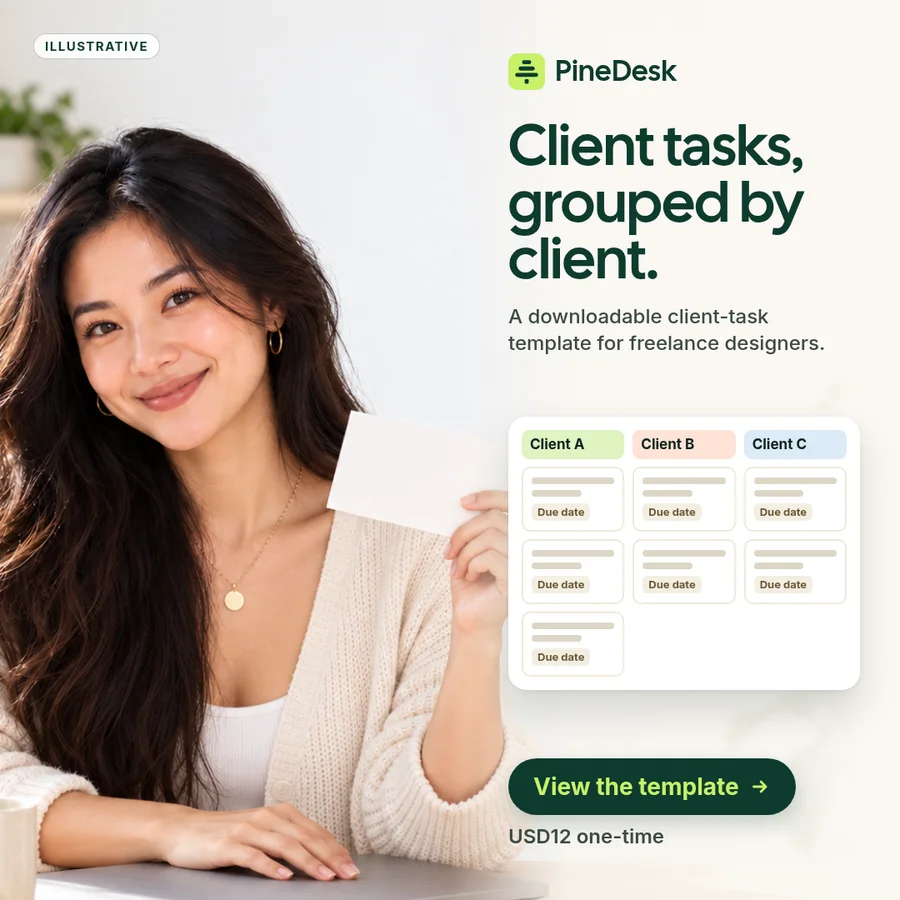
A short offer brief went in. Workflow 04 returned three distinct concepts. Each became a finished square Meta feed ad for the fictional brand PineDesk.

2Concept

Angle
Show the template’s client-grouping structure without implying automation.
Headline
Client tasks, grouped by client.
Finished design
The presenter at her desk beside a task board grouped under Client A, B and C.

3Image ad

PineDeskSponsored · fictional

PineDesk is a downloadable client-task template for freelance designers, with fields for grouping tasks by client and storing due dates. USD12 one-time.

Sample square ad for the fictional brand PineDesk: the presenter at her desk beside a task board grouped under Client A, B and C, headline Client tasks, grouped by client, and a View the template button.
Client tasks, grouped by client.View the template
Angle
Isolate one approved capability: storing due dates alongside client tasks.
Headline
Keep due dates with the task.
Finished design
The presenter holding a notebook beside a task card with its due-date field.

3Image ad

PineDeskSponsored · fictional

PineDesk includes fields for client tasks and their due dates in a downloadable template for freelance designers. One-time price: USD12.

Sample square ad for the fictional brand PineDesk: the presenter holding a notebook beside a task card with a due-date field, headline Keep due dates with the task, and a View the template button.
Keep due dates with the task.View the template
Angle
Differentiate the optional reminder checklist while making its non-automated nature clear.
Headline
Add the checklist when you need it.
Finished design
A colour-blocked headline panel with the optional checklist, beside the presenter writing.

3Image ad

PineDeskSponsored · fictional

PineDesk includes an optional reminder checklist alongside fields for client tasks and due dates. It sends no notifications and has no integrations.

Sample square ad for the fictional brand PineDesk: the presenter writing at her desk under the headline Add the checklist when you need it, with an optional reminder checklist card and a View the template button.
Add the checklist when you need it.View the template
View the full Workflow 04 response

Here is the completed workflow result, using only the supplied S1–S4 offer evidence. Pasted text

1. Brief basis and open decisions

  • Offer/buyer: PineDesk is a downloadable client-task template for freelance designers.
  • Approved claim basis: It groups tasks by client, stores due dates, and includes an optional reminder checklist. It sends no notifications and has no integrations. Price is USD12 one-time.
  • Objective/CTA: Facebook/Instagram Feed images and 9:16 Reels scripts optimized for link-click response. Exact CTA: “View the template” to a product information page.
  • Constraints: Calm, concise tone. No logos, real UI screenshots, customer quotes, or finished assets supplied. Any paper/card graphics below are illustrative concepts, not representations of the real interface.

2. Three image-ad concepts

I1 — Client-grouped structure

Angle/buyer tension: Show the template’s client-grouping structure without implying automation.

Headline:

Client tasks, grouped by client.

Primary copy:

PineDesk is a downloadable client-task template for freelance designers, with fields for grouping tasks by client and storing due dates. USD12 one-time.

CTA:

View the template

Production brief:

  • Subject: Illustrative paper cards labeled with neutral placeholders such as “Client A” and “Client B.”
  • Composition: Separate card groups, each containing simple task lines and date fields.
  • Overlay: “Group tasks by client.”
  • Placement: Facebook/Instagram Feed image; exact aspect ratio not supplied.
  • Assets/exclusions: Label graphics illustrative. Do not depict a real PineDesk UI, logo, integrations, notifications, or customer content.

Claim basis: S1, S2, S3, S4.

I2 — Due-date focus

Angle/buyer tension: Isolate one approved capability: storing due dates alongside client tasks.

Headline:

Keep due dates with the task.

Primary copy:

PineDesk includes fields for client tasks and their due dates in a downloadable template for freelance designers. One-time price: USD12.

CTA:

View the template

Production brief:

  • Subject: Illustrative task cards paired with clearly visible date fields.
  • Composition: One central card enlarged, with secondary cards receding behind it.
  • Overlay: “Task + due date.”
  • Placement: Facebook/Instagram Feed image; exact aspect ratio not supplied.
  • Assets/exclusions: Conceptual card treatment only. No calendar integration, alerts, automated reminders, or real screenshots.

Claim basis: S1, S2, S3, S4.

I3 — Optional checklist

Angle/buyer tension: Differentiate the optional reminder checklist while making its non-automated nature clear.

Headline:

Add the checklist when you need it.

Primary copy:

PineDesk includes an optional reminder checklist alongside fields for client tasks and due dates. It sends no notifications and has no integrations.

CTA:

View the template

Production brief:

  • Subject: Illustrative paper task card with a separate checklist card beside it.
  • Composition: Main task card on one side; optional checklist visually attaches as a second piece.
  • Overlay: “Optional reminder checklist.”
  • Placement: Facebook/Instagram Feed image; exact aspect ratio not supplied.
  • Assets/exclusions: Mark artwork illustrative. Do not depict push alerts, automated actions, integrations, or a real interface.

Claim basis: S1, S2, S4.

3. Two short video-ad script concepts

V1 — Build the structure

Distinct angle: An assembly story: separate paper elements combine into one illustrative client-task template.

Opening hook:

“Client tasks. Due dates. Optional checklist.”

0–5s:

Visual: Loose illustrative paper task cards slide into client-labeled groups.

Text/VO: “PineDesk groups tasks by client.”

5–10s:

Visual: Date fields appear beside the task lines.

Text/VO: “Store due dates with each task.”

10–15s:

Visual: A separate checklist card is added, followed by “USD12 one-time.”

Text/VO: “Add the optional reminder checklist. USD12 one-time.”

Closing CTA:

View the template

Production note: 9:16 Reels. All cards are illustrative, not real UI. No notification or integration behavior.

Claim basis: S1–S4.

V2 — What it includes / what it doesn’t

Distinct angle: A capability-boundary story rather than an assembly sequence.

Opening hook:

“What’s inside PineDesk?”

0–5s:

Visual: Large kinetic text: “GROUP BY CLIENT” with simple illustrative card stacks.

Text/VO: “Fields that group tasks by client.”

5–10s:

Visual: Text changes to “DUE DATES + OPTIONAL CHECKLIST.”

Text/VO: “Store due dates and use an optional reminder checklist.”

10–15s:

Visual: Clean text frame: “No notifications. No integrations. USD12 one-time.”

Text/VO: “No notifications or integrations. USD12 one-time.”

Closing CTA:

View the template

Production note: 9:16 Reels using typography and abstract illustrative paper shapes rather than a simulated interface. This tests a direct feature-and-boundary explanation versus V1’s assembly story.

Claim basis: S1–S4.

4. Test hypotheses

  • I1: Tests client-grouping as the lead message. Support: stronger link-click response than the other image executions under comparable delivery.
  • I2: Tests due-date storage as the lead message. Support: stronger link-click response than I1 and I3 under comparable delivery.
  • I3: Tests the optional checklist plus explicit non-automation boundary. Support: stronger link-click response than the other image concepts under comparable delivery.
  • V1: Tests an illustrative build-up sequence that introduces approved features progressively. Support: stronger link-click response than V2 under comparable delivery.
  • V2: Tests a direct “includes / does not include” capability explanation. Support: stronger link-click response than V1 under comparable delivery. Link clicks indicate response to the ad, not verified sales.

5. Before use

  • Confirm final copy retains only S1–S4 claims, including the “no notifications / no integrations” boundary wherever relevant.
  • Replace or approve all illustrative production elements before use; do not present conceptual cards as real PineDesk UI or brand assets.
  • Confirm the exact “View the template” CTA points to the supplied product information page and review final ads for applicable platform requirements before publication.

Actual ChatGPT response, unedited, to Workflow 04 (v0.7.1) with a fictional brief. One saved run in ChatGPT on a Pro account with Extra High effort in a temporary chat.

PineDesk is a fictional business used for demonstration, not an Athena product. Headlines come from a saved Workflow 04 response; the AI-generated presenter and finished layouts were designer-composed, so these are not untouched first-pass outputs. Owner runs of Creative Builder in ChatGPT and Claude also needed visual revisions.

Try the free creative brief — one concept, headline, copy and image-generation brief from your own inputs.

Six workflows. One download.

Everything in the kit.

Each workflow is one prompt file with a matching example input. Paste one prompt and your anonymized input into a fresh chat.

  1. 01
    Meta Conversion Tracking Triage

    Investigate tracking discrepancies and identify the next check.

  2. 02
    Meta Campaign Delivery Troubleshooter

    Work through delivery evidence in order and identify the next check, with a client handoff note.

  3. 03
    Meta Campaign Report Analyst

    Recalculated metrics, what changed in one line, and a client update draft.

  4. 04
    Meta Ad Creative Builder

    Three image-ad concepts and two short video scripts. Choose a concept, then produce a separate image in a compatible app. Controlled text composition may be needed to correct generated lettering.

  5. 05
    Ad-to-Landing-Page Reviewer

    Finds where the page promises something the ad doesn’t, then drafts a matching hero and CTA.

  6. 06
    Meta Lead Follow-Up Writer

    Three follow-up drafts, marked DO NOT SEND when permission is unknown. It sends nothing.

Each run reviews the evidence you paste, one case at a time. The workflows do not connect to Meta, watch accounts, launch campaigns, repair tracking, send messages or update a CRM.

Examples for 05 and 06

05 · Ad-to-Landing-Page Reviewer

The ad sells a checklist. The page promises monitoring.

The page hero read Your Meta campaigns, monitored around the clock. The draft below matches what is actually sold.

Suggested hero
30 checks before your next Meta launch.
Supporting copy
A downloadable checklist for human review before publishing. USD19 one-time.
CTA
Get the checklist

06 · Meta Lead Follow-Up Writer

A lead is not permission to contact.

With email permission confirmed in the brief: the first of three drafts. Unknown permission requires DO NOT SEND; opt-out requires HOLD with no drafts.

Subject
What to provide
Message
For the remote checklist review, please provide a redacted checklist. The response is a written list of observed gaps. Do you have a redacted checklist ready?
Stop rule
Stop on reply, opt-out or booking.

Fictional examples written by Athena to show the format. Not ChatGPT responses.

From download to draft

Use one workflow. Keep your own judgment.

No dashboard and no account connection. Your download includes the prompts, example inputs, setup notes and limits.

Step 1 · Pick one job

Step 2 · Add your input

Step 3 · Run in your own chat

Step 4 · Review and use

Pricing

One price. Six workflows.

Pay once and keep the files. Your AI account is separate.

Inside the download

  • START-HERE.mdSetup and short intake guidance
  • PROMPTS/6 workflow files
  • EXAMPLES/6 example inputs with illustrative answers
  • COMPATIBILITY-AND-LIMITS.md
  • LICENSE-SUPPORT-AND-TERMS.md
  • VERSION-NOTES.md

One ZIP of Markdown and text files. Image production requires an image-capable app. Controlled text composition may be needed to correct generated lettering. AI and tool costs are separate. Video output is scripts only.

Athena Ads Ops · all six workflows

$49USD · one-time

For one individual buyer. Use it for your own work and for client deliverables you have reviewed.

Get all 6 workflows — $49

Full refund on request within 7 days.
Refund, license and support terms

Creative Builder has been used in ChatGPT Free and Pro, and in Claude with Canva. Image tools and usage limits vary. AI services are separate. Applicable tax is separate. Setup details

FAQ

A few practical answers.

Why buy this instead of writing my own prompt?

You can write your own. Athena gives you the intake, evidence rules, answer format and worked examples together, so you have a defined starting point for repeated tasks. It is not a guarantee of better ads.

Does it connect to my Meta account?

No. You paste anonymized evidence into your own AI chat, one case at a time. The workflows do not connect to Meta, watch accounts, launch ads, repair tracking, send messages or update a CRM.

Does it make finished image ads?

Creative Builder can produce a selected ad where your chat has a compatible image tool, or give a production prompt when it cannot. Creative Builder has been used in ChatGPT Free and Pro, and in Claude with Canva. Image tools and usage limits vary. AI services are separate. Prior owner runs needed visual revisions; the Free example included a combined board. Check exact words, dimensions and phone-size readability before use. These gallery ads retain their designer-edited provenance.

What exactly do I receive?

Athena Ads Ops 0.7.4: six Meta workflow prompts with setup notes and example inputs in a ZIP. Attach or paste a workflow in your own chat and add your inputs. Creative Builder includes a selected-concept image path where compatible tools are available; lettering may need correction or controlled composition. Video scripts remain text. No connected app or automatic ad publishing.

Which AI setups has it been used in?

Owner Creative Builder tests used ChatGPT Free and Pro, and Claude with Canva; those prior-version runs needed revisions, and the Free run returned a combined board. The 0.7.4 intake was observed in six fresh ChatGPT Temporary/Unpersonalized chats outside Projects. One selected creative was completed in regular ChatGPT using image generation and controlled composition after incorrect generated wording. High effort was visible, but the exact model and plan were not independently verified. These checks do not certify all six workflows on Free or one-shot quality. See the download’s compatibility notes for the observed scope.

Can I use it for client work?

One individual buyer can use the prompts for their own work and human-reviewed client deliverables. Prompt redistribution, resale and team sharing are not included.

What should I check before using an answer?

Check calculations, claims, CTAs and contact permission yourself. A model can leave out a field or add something the evidence doesn’t support. Copy each email subject field separately: native email-box Copy can omit it. Then copy the body, retain its timing and review all three complete drafts.

What support and updates are included?

Email hello@athenaadsops.com for help with file access or the documented setup. No calls, consulting, account work or response-time guarantee. Keep your download; corrections and minor updates are included if released, with no release schedule or promise of future modules.

Athena · your ads ops guide

Bring the evidence. Know what to check next.

Six workflows for the questions clients ask most.

Get all 6 workflows — $49
  • $49 one-time
  • 7-day refund request
  • Human review required